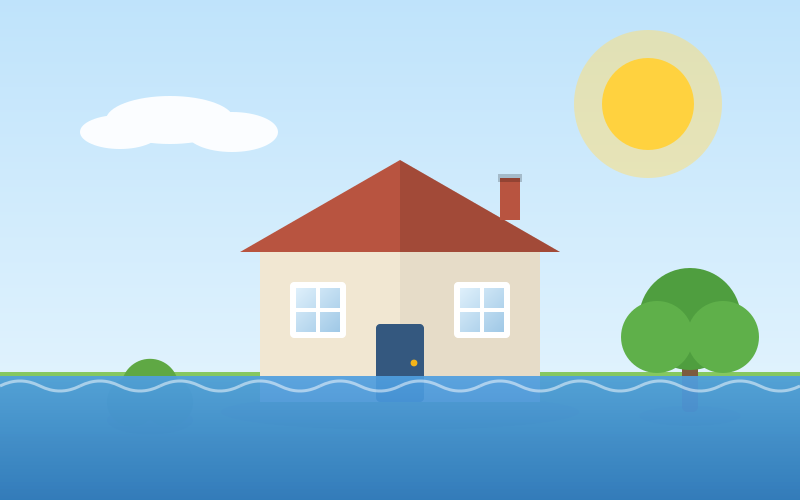
Here's the surprise that costs families dearly: a standard homeowners policy does not cover flood damage. If water rises from the ground up — an overflowing river, storm surge, flash flooding, even a backed-up drainage system after heavy rain — you need a separate flood policy. Just an inch of water in a home can cause tens of thousands of dollars in damage, so this is not a small gap.
Who needs it
More people than realize it. If your home is in a high-risk flood zone and you have a federally backed mortgage, flood insurance is usually required. But risk isn't limited to mapped zones:
- A meaningful share of flood claims come from areas considered low-to-moderate risk.
- New development, paved-over land, and changing weather patterns push water into places that never flooded before.
- Flood maps are updated periodically — your risk classification can change.
"I'm not in a flood zone" really means "I'm in a lower-risk zone," not "I'm safe."
Where to get it
Two main sources:
- The National Flood Insurance Program (NFIP), a federal program sold through regular insurance agents. Coverage limits are capped (for example, up to a set maximum for the building and a separate maximum for contents).
- Private flood insurers, which can offer higher limits and sometimes better pricing, especially for lower-risk homes or those needing more coverage than the NFIP caps allow.
Compare both — pricing and limits vary, and a private policy may cover things (like temporary living expenses) that basic NFIP coverage doesn't.
What it covers — and the two-policy quirk
Flood policies typically cover the structure and your contents as two separate coverages, each with its own limit and deductible — so make sure you buy enough of both. Many homeowners insure the building and forget contents, then discover their belongings weren't covered.
Coverage details and exclusions matter (basements, for instance, are often limited), so read what's included before you assume.
Don't wait for the forecast
This is the trap that catches people: most flood policies have a 30-day waiting period before coverage takes effect. Buying as a storm bears down is too late. The time to put a policy in place is now, while skies are clear — not when the radar lights up.
Reduce your risk and your premium
Steps like elevating utilities and equipment, installing flood vents, grading soil away from the foundation, and keeping an elevation certificate can lower both your risk and your rate. Your agent can point to mitigation that pays off.
The bottom line
Floods are the most common and costly natural disaster, and your homeowners policy won't touch them. Check your real risk, compare NFIP and private quotes, insure both the structure and your contents, and buy well before storm season — the 30-day clock means waiting is the one thing you can't afford to do.
Check your flood risk
Review home and flood coverage options through our trusted partner, InsureMyHome.

A little smarter every morning
Join the free Blue Ribbon Bulletin — one practical money tip in your inbox every day.